
Ever wish you could magically find more hours in your day? Imagine if you could learn a language while driving, turning every commute into a chance to build your skills. Most of us are stuck in traffic or on the road for hours each week, wishing we had time for self-improvement.
The real challenge is squeezing language learning into a packed schedule. But what if you could actually make progress, all while keeping your eyes on the road and hands on the wheel? In 2025, new tech and creative strategies make it easier than ever.
This article shares 7 smart ways to learn a language while driving, using the latest tools and proven methods. You'll get practical tips, must-have resources, and safe routines so you can start speaking a new language without changing your daily routine.
Ready to turn your drive into the most productive part of your day? Let’s dive in and see how you can learn a language while driving—no extra time required.
Why Learn a Language While Driving?
Ever feel like your commute is just wasted time? Turns out, those hours behind the wheel can be the secret to picking up a new skill. If you're looking to learn a language while driving, you're in good company. More and more people are discovering the magic of turning "dead time" into productive, brain-boosting minutes each day.
The Value of "Dead Time"
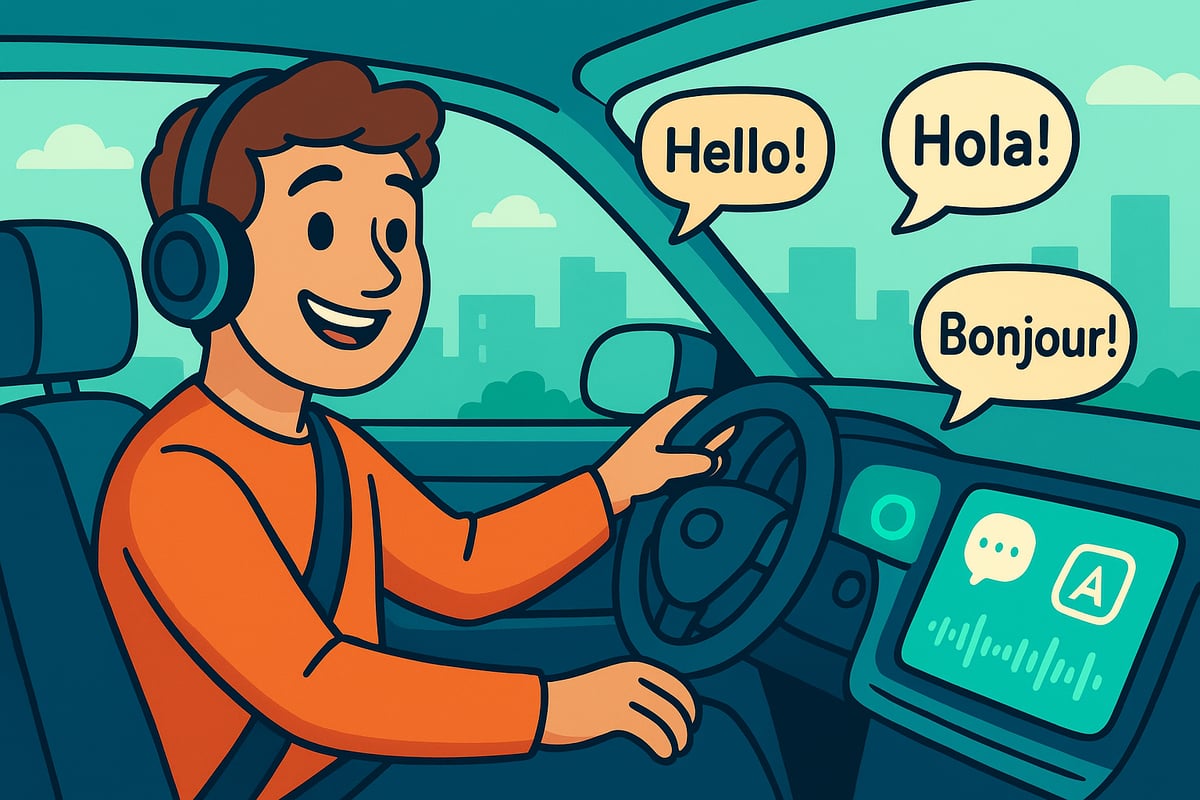
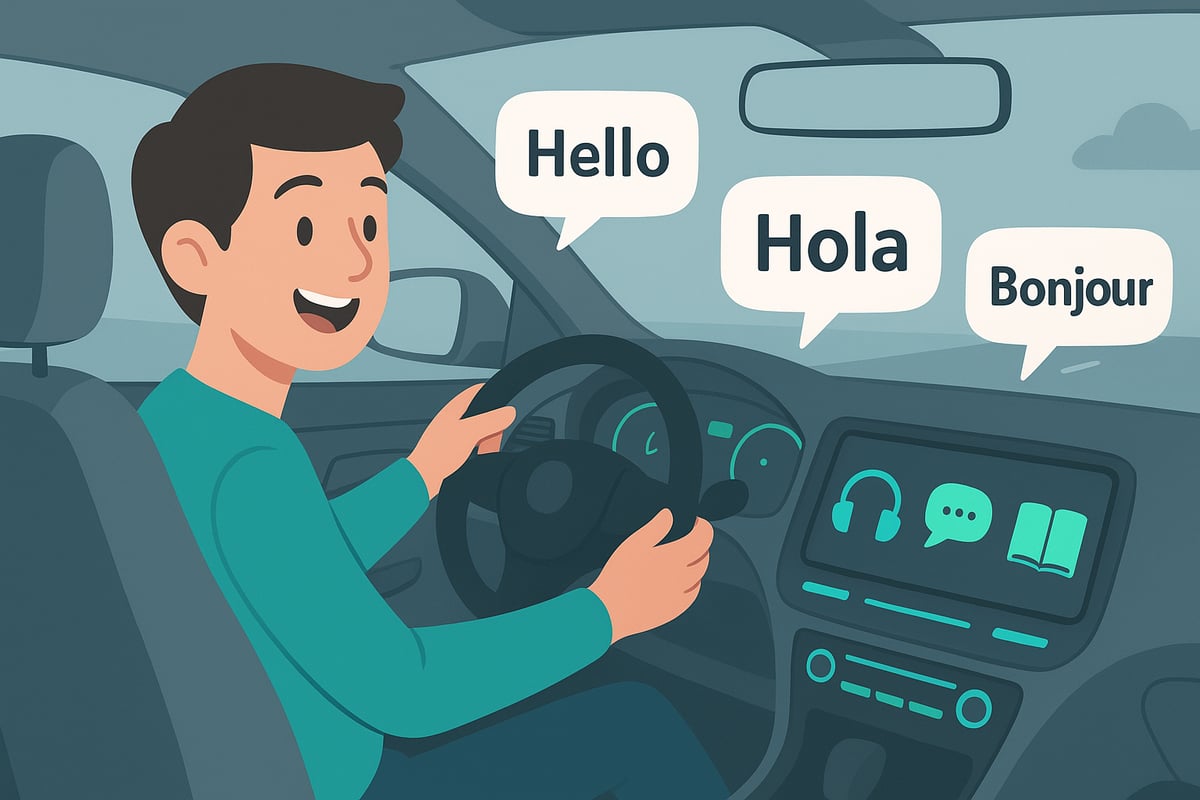
Did you know the average American spends over eight hours a week in the car? That's a lot of time that could be put to good use. When you learn a language while driving, you're not just passing the time, you're turning your commute into a mini language bootcamp.
Imagine a busy professional practicing business Spanish on the way to work, a student prepping for a semester abroad, or a travel enthusiast picking up French for an upcoming trip. These are real people using their daily drives to get ahead.
There's also a psychological boost. Productive multitasking—like learning while commuting—can actually lower stress and make you feel more accomplished. If you add up the hours, 100 hours in the car is enough to reach an A1 CEFR level in many languages. For practical tips, check out this guide on Incorporating language learning into daily commutes.
The Power of Audio-First Learning
Driving is the perfect time for audio learning. Since your hands and eyes need to stay focused on the road, listening and speaking practice fits right in. That’s why audio-first methods are so effective when you want to learn a language while driving.
When you immerse yourself in audio, your listening comprehension and pronunciation skills get a serious upgrade. Studies show that repeated exposure to spoken language speeds up vocabulary retention and makes it easier to understand native speakers.
Listening and speaking are two of the four core language skills, and they’re the ones you can safely practice on the road. Whether you’re repeating phrases, shadowing a native speaker, or just soaking in new vocabulary, you’re making real progress every mile.
Safety First: Learning Without Distraction
Of course, safety comes first when you learn a language while driving. The key is sticking to hands-free, eyes-on-the-road methods. Before you start your car, queue up your audio lessons, connect through Bluetooth or your car’s audio system, and avoid any screen interaction.
Modern tech makes this even easier. Voice-controlled tools like CarPlay, Android Auto, and built-in assistants let you switch lessons, pause, or repeat phrases using simple voice commands. Always follow local laws and best practices, and remember—if you need to interact with your device, pull over first.
With the right approach, you can make language learning a safe, efficient, and rewarding part of your daily drive.
7 Smart Ways to Learn a Language While Driving in 2025
Ready to turn your commute into a language learning powerhouse? Let’s break down seven creative, tech-savvy, and safe ways to learn a language while driving in 2025. You’ll find each tip practical, hands-free, and perfect for busy lives.
1. Use AI-Powered Conversation Apps
Imagine your car as a moving language classroom, complete with your own AI tutor. AI-powered conversation apps have totally changed how people learn a language while driving. These apps, like Scenaria, create interactive, voice-first lessons. You talk, the AI responds, and you get instant feedback, all hands-free.
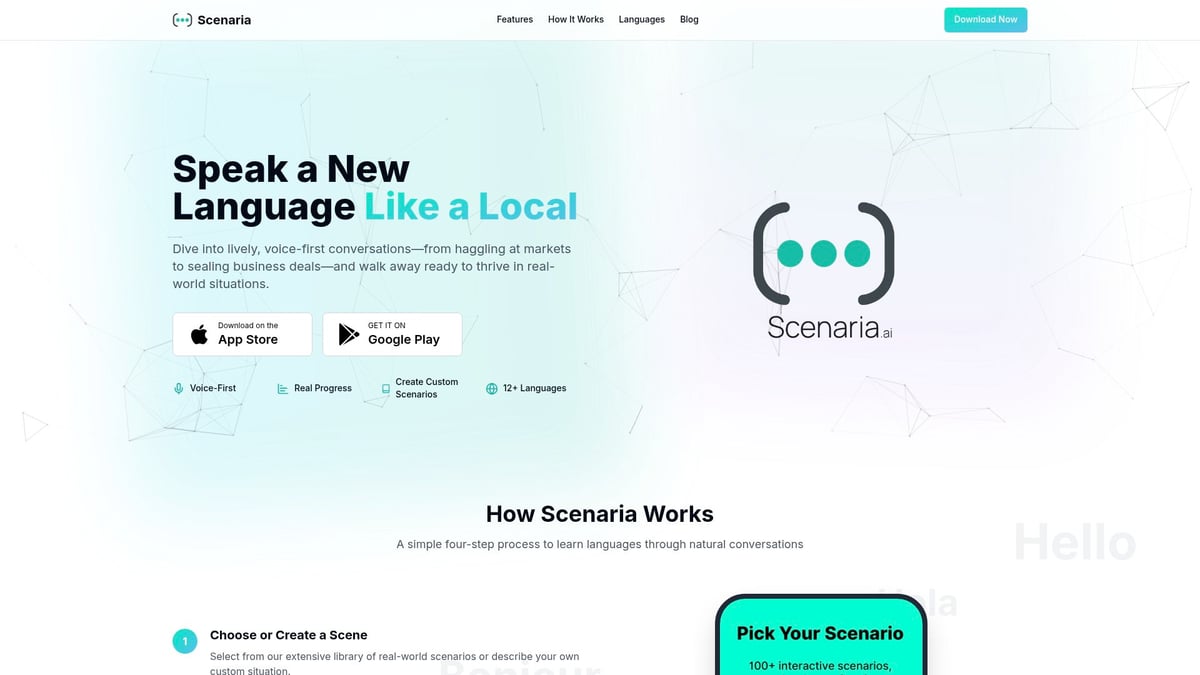
With these apps, you can practice real-life scenarios, from travel emergencies to business meetings. Customizable lessons let you focus on what matters most, whether you’re a beginner or already advanced. Gamification keeps things fun, and progress tracking helps you stay motivated on every drive.
What’s really cool is that you don’t need to touch your phone. Voice-activated controls make it safe and legal, letting you focus on the road. You can even pick scenarios that match your daily routine. Want to see which apps perform best? Check out this Best AI conversation partner review for an in-depth look.
It’s never been easier to learn a language while driving, thanks to AI. These tools turn your commute into a natural, engaging, and effective language practice session. You’ll be surprised how quickly you progress when practice fits seamlessly into your daily routine.
2. Listen to Structured Audio Courses
If you love a bit of structure, audio courses are a classic way to learn a language while driving. Programs like Pimsleur, Michel Thomas, and Assimil have specially designed audio lessons that break language down into bite-sized, 30-minute sessions.
These courses use spaced repetition, introducing new vocabulary and grammar gradually. You’re encouraged to speak aloud and shadow native speakers, building confidence and fluency. Because lessons are audio-only, you won’t need to touch your phone or look at a screen while driving.
Here’s how it works: queue up a lesson before you start your car, and follow along as you drive. If your commute is shorter, you can pause and finish the lesson later. Many learners find that two commutes are enough to finish a full lesson, making it easy to learn a language while driving without stress.
Audio courses cover a wide range of languages and levels, so you can pick what suits you best. They’re ideal for beginners and intermediates who want a clear, step-by-step path. Plus, repeating lessons helps lock in what you’ve learned. With consistent practice, you’ll notice real progress in just a few weeks.
3. Subscribe to Language Learning Podcasts
Podcasts are a fantastic way to learn a language while driving, especially if you enjoy variety and want to stay updated on culture and current events. There’s a podcast for every level, from absolute beginner to advanced, and topics range from grammar to news and even pop culture.
Popular choices include Coffee Break Languages, Innovative Language’s Pod101 series, and News in Slow. New episodes come out weekly, so you’ll always have fresh material. Many podcasts are free or low-cost, and you can listen on Spotify, Apple Podcasts, or dedicated apps.
Passive listening builds comprehension and helps you get used to native accents. If you want, you can pause and repeat phrases or write down new words after your drive. It’s an easy way to learn a language while driving without adding extra stress to your day.
Try mixing up different podcast styles: some focus on stories, others on interviews or language tips. This keeps things interesting and exposes you to different speaking speeds and accents. Over time, you’ll find your listening skills and vocabulary growing naturally.
4. Practice Shadowing and Speaking Aloud
Shadowing is a powerful technique to learn a language while driving. It simply means repeating what you hear, phrase by phrase, to mimic native pronunciation and rhythm. This technique helps you sound more authentic and builds speaking confidence.
You can use shadowing with audio lessons, dialogues, or even foreign radio segments. Just listen, repeat right after, and try to match the speaker’s intonation. Speaking aloud, even if you’re alone in the car, boosts memory and helps you internalize new words.
For best results, use shadowing during low-stress driving, like on quiet roads or familiar routes. If you’re stuck in traffic, turn that frustration into productive practice. Research shows shadowing speeds up spoken language acquisition, making it a smart way to learn a language while driving.
Mix it up by shadowing different voices and accents. Over time, you’ll notice your fluency and pronunciation improving, making conversations feel more natural.
5. Create a Hands-Free Playlist of Audio Resources
Building a playlist is a fun and flexible way to learn a language while driving. Curate your own mix of dialogues, vocabulary drills, songs, and short stories. Use streaming platforms or download MP3s so you’re not stuck if you lose signal on the road.
Set up your playlist before you start the car. That way, you won’t be tempted to fiddle with your phone. Alternate between structured lessons and authentic audio, like music or news, to keep things fresh and engaging.
Repeat your favorite tracks often. Cognitive studies show that repetition can increase retention by up to 80 percent. With a playlist, you control the pace and variety, making it easy to learn a language while driving without getting bored.
Here’s a tip: create themed playlists for different days or moods. Maybe Monday is for grammar drills, Wednesday for songs, and Friday for stories. This approach keeps language learning exciting and sustainable.
6. Leverage Smart Car Integration and Voice Assistants
Modern cars make it easier than ever to learn a language while driving. Apple CarPlay, Android Auto, and built-in voice assistants let you control audio playback, switch lessons, and interact with content using just your voice.
You can ask Siri, Alexa, or Google Assistant to play the next lesson, repeat a tricky section, or even set reminders for practice. Hands-free controls mean you stay focused on driving, while still making the most of your commute.
In 2025, more language apps are integrating with car systems, making it seamless to access your favorite tools. You can track your progress, switch between resources, and never miss a beat. This tech makes it safer and more convenient to learn a language while driving, so you can build a daily habit without hassle.
Don’t forget, you can also record voice memos (when parked) to log new phrases or set goals for your next drive. Smart integration takes language learning on the road to a whole new level.
7. Set Personal Language Challenges for Each Drive
Setting small goals turns every trip into a mini language adventure. Before you start the car, pick a micro-challenge: maybe learn five new phrases, master a dialogue, or review yesterday’s lesson.
Spaced repetition is your friend. Quickly review what you learned last time before starting something new. After your drive, record a quick voice memo (while parked) to track your progress or note what you want to improve.
Gamify the process by rewarding yourself after hitting milestones. For example, after ten commutes, treat yourself to a coffee or a new audiobook. You can even involve family or carpool buddies for group practice, making it more social and fun.
This approach keeps you motivated and consistent, which is the secret to lasting success when you learn a language while driving. Remember, small steps add up fast, and every mile can move you closer to fluency.
Maximizing Results: Tips for Efficient Language Learning on the Road
Want to squeeze every drop of value out of your commute? With a little strategy, you can turn your car into a rolling classroom and truly learn a language while driving. Here’s how to make your efforts count, stay safe, and keep your motivation high.
Preloading and Planning Content
Before you even start the engine, set yourself up for success. Download all your lessons, podcasts, or playlists in advance. This way, when you learn a language while driving, you won’t have to worry about buffering or losing signal in a tunnel.
Queue up your audio resources and organize them by lesson length. Got a long drive? Tackle a full lesson. Quick trip to the store? Try a five-minute vocab review. Planning ahead means you’re always ready to learn a language while driving, no matter how short or long your commute.
Combining Passive and Active Practice
Mix things up to keep your brain engaged. Alternate between passive listening, like podcasts or foreign music, and active speaking, such as repeating phrases or shadowing dialogues. This approach helps you learn a language while driving without things getting stale or repetitive.
When there’s a pause in your audio, try building sentences out loud or recalling new vocab. Even a few minutes of active practice can solidify what you’ve just heard. Reflect on each lesson after you park, summarizing the key points in your head or out loud.
Tracking Progress and Staying Motivated
Seeing progress is a huge motivator when you’re trying to learn a language while driving. Use language apps with built-in trackers, or record voice memos after each drive to log new words and phrases.
Celebrate small wins, like understanding a full conversation or nailing a tricky pronunciation. If you need more actionable tips, check out this practical guide to language fluency, which is packed with strategies to maximize your commute-based learning. Consistency is key, so aim for a little bit of practice every day.
Safety Reminders and Best Practices
Safety always comes first when you learn a language while driving. Set all your lessons before you start moving, and use voice commands or steering wheel controls to manage playback. Never interact with your phone, write notes, or look at screens while on the road.
If you need to jot something down or review a tricky phrase, pull over and park first. Remember, staying focused on driving keeps you and everyone else safe.
Real-Life Success Stories
Plenty of people have learned a new language during their daily commute. Some reach conversational fluency in just a few months by sticking to their routine. Want more inspiration? Dive into this comprehensive guide to learning languages while driving for real stories, practical methods, and safety tips.
The bottom line: with the right tools and a bit of planning, you can make every mile count. Your next road trip could be the start of your language learning adventure.
Choosing the Best Tools and Strategies for Your Needs
Choosing how to learn a language while driving can feel overwhelming with so many options out there. The trick is to match your tools and strategies to your personal style, goals, and daily routine. Let’s break it down so you can hit the road with confidence and make real progress.
Matching Learning Style to Method
Everyone’s got a unique way they like to learn a language while driving. If you’re an auditory learner, you’ll thrive with podcasts, audio courses, or playlists packed with dialogues and songs. Prefer social interaction? AI-powered conversation apps and carpool language games might be your jam. For goal-oriented folks, structured courses with built-in progress tracking work wonders.
Curious about the science behind it? Check out this deep dive on the benefits of auditory language learning. It explains why podcasts and audio lessons can supercharge pronunciation and listening skills, especially when you’re multitasking on the road.
No matter your style, there’s a method that fits. Try a few and see what clicks for your drive.
Free vs. Paid Options
Budget matters when you want to learn a language while driving, but so does quality. Free resources like podcasts, YouTube lessons, and public domain audiobooks are great for getting started. They’re flexible and easy to access. Premium tools, like Pimsleur or Scenaria, offer more structure, instant feedback, and advanced features.
Not sure which app is worth your time? Check out this Scenaria vs. Duolingo comparison for a hands-on look at which platforms deliver the best speaking skills, especially for hands-free use behind the wheel.
Mix and match free and paid options to find your sweet spot without breaking the bank.
Factors to Consider When Selecting Resources
To learn a language while driving effectively, think about what you need from your resources. Does your target language (or dialect) have good audio content? Are the lessons short enough for your commute, or can you pause and resume easily? Offline access is huge—no one wants buffering in a tunnel.
Also, check if your favorite tools work smoothly with your car’s audio system or voice assistant. Interactivity can make a big difference, especially if you like speaking along or getting instant feedback.
A little planning here saves you headaches later and keeps your learning journey smooth.
Building a Sustainable Routine
The secret to learn a language while driving is consistency. Start with realistic goals, like 15 minutes per day, and build up as you get comfortable. Don’t be afraid to switch up your methods as you progress—what works as a beginner might feel too easy later on.
Combine passive listening with active speaking for balance. Celebrate every milestone, even the small wins, to stay motivated. Make language practice a regular part of your commute, just like your favorite playlist or coffee stop.
Stick with it and you’ll be amazed at how much you can achieve on the road.
So, now that you’ve seen how easy it can be to turn drive time into language learning gold, why not actually give it a try? With an app like Scenaria, you get those immersive, real-life conversations we talked about—all hands free, so you can focus on the road and your new language at the same time. You could start chatting like a local before you know it, just by making the most of your daily routine. Ready to see how much you can learn on your next commute?
Download Now