

Unlock Local Fluency: How AI Revolutionizes Language Learning
Learning a new language opens up a world of possibilities, from connecting with diverse cultures to enhancing career prospects. However, truly “speaking like a local” – understanding the subtle nuances, idioms, and natural rhythm of everyday conversation – can feel like an elusive goal. Many traditional methods often fall short of equipping learners with the…
7 Smart Ways to Learn a Language While Driving in 2025
Turn your commute into a language lesson Learn a language while driving in 2025 with 7 smart tips and new tech Make every drive count and boost your skills
Top 10 Best Japanese Learning App Picks for 2025
Ready to find the best japanese learning app for you Check out our top 10 picks for 2025 with honest reviews tips and features to level up your skills fast
Top 7 Picks for the Best App to Learn French in 2025
Looking for the best app to learn French in 2025 Get honest reviews of the top 7 picks with tips on features pricing and which app fits your style best
Unlock Your Voice: Overcoming the Speaking Hurdle in Language Learning with Scenaria
Learning a new language often feels like a two-part journey. First, there’s the exciting initial phase of expanding your vocabulary and grasping grammar rules. But then comes the real challenge: actually speaking it. Many learners find themselves stuck, able to read and understand, yet hesitant to engage in real conversations. This common hurdle isn’t about…
Comparing the Best Ways to Practise Conversation in a New Language: Adapting to Accents and Real-World Scenarios
When aiming to master conversational fluency in a new language, simply memorising vocabulary or phrasebooks is seldom enough. The real challenge is not just knowing what to say but how to say it—adapting to different accents, understanding cultural cues, and mastering authentic, in-the-moment dialogue. With today’s technology, several tools and methods claim to offer adaptive…
How to Be “Prepaid” for Every Scenario?
In an increasingly interconnected yet often unpredictable world, true confidence stems not from avoiding challenges, but from the quiet assurance that you’re genuinely ready for them. We’ve all experienced those moments of conversational paralysis – the unexpected question in a job interview, the delicate feedback session with a colleague, or even just the awkward silence…
Unlock Your Voice: How AI is Revolutionizing Language Learning with Scenaria
For countless aspiring polyglots, the dream of speaking a new language fluently often crashes against a formidable barrier: the fear of speaking. Textbooks can teach grammar, apps can drill vocabulary, but nothing truly prepares you for the exhilarating (and often intimidating) dance of real-time conversation. This is where the true power of Artificial Intelligence is…
Beyond Flashcards: Mastering a New Language Through Real-Life Situations
For many aspiring polyglots, the journey to language learning often begins with enthusiasm, a stack of flashcards, and a grammar book. Hours are meticulously spent memorizing vocabulary, conjugating verbs, and deciphering complex grammatical rules. Yet, despite dedicated effort and accumulating a vast lexicon, a common and deeply frustrating reality emerges: the profound inability to confidently speak a new…
How to Do Deep Work: A Practical Guide to Unlocking Your Focus Superpower
Check your email. Respond to a Slack message. Glance at a phone notification. Open a new tab to “quickly” look something up. Check your email again. Sound familiar? This is the daily reality for most of us. We live in a state of fractured attention, flitting from one low-value task to another, feeling busy but…







How to practice a new language by chatting with AI?
Step 1: Pick Your Scenario
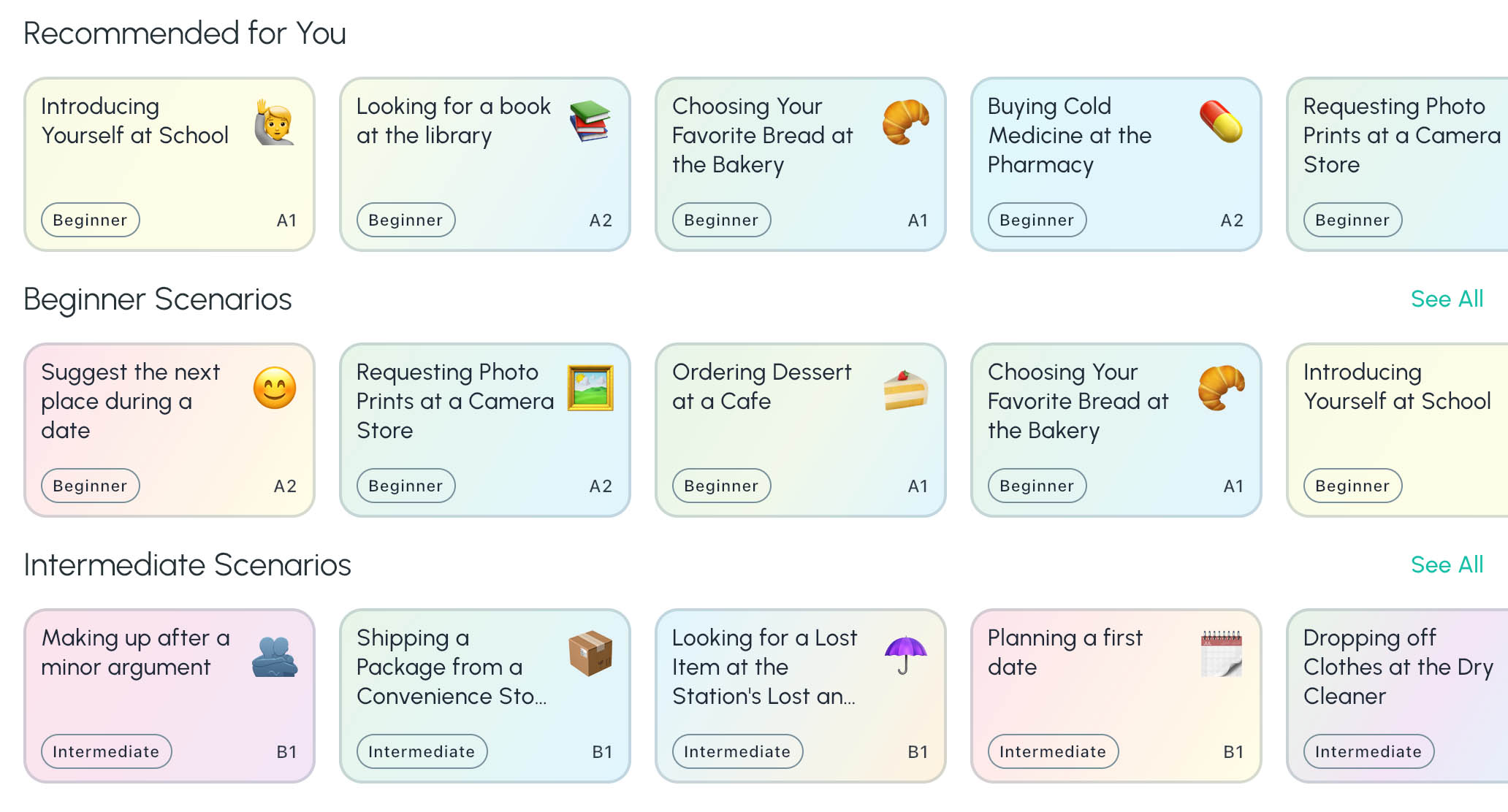
Start by choosing a real-world situation from the Scenaria.ai app. For example: “Ordering coffee at a café” or “Asking for directions to the museum.”
Each scenario helps you practice language in a realistic, contextual setting—so your learning feels natural and relevant.
Step 2: Chat & Engage
Dive in! Speak or type your responses. Don’t worry about perfection; focus on getting your message across. AI provides a low-pressure space to experiment and build speaking confidence.
Step 3: Learn from Feedback
Pay attention to the AI’s corrections or suggestions for better phrasing. Immediately try applying the feedback to refine your grammar, vocabulary, and pronunciation for more natural conversational fluency.
Step 4: Explore New Situations
Once comfortable, switch it up! Practice different scenarios like job interviews, airport check-ins, or casual chats about hobbies. Diverse scenario-based practice ensures you’re ready for anything.